


Modal wins on softness and moisture management, making it the better pick for activewear, hot climates, and sensitive skin. Cotton wins on durability, breathability in dry conditions, and simplicity of care. Quality changes the math: a premium long-staple cotton narrows the gap considerably, so the real decision often comes down to how you use the garment, not just which fiber sounds better on a label.
TL;DR:
- Modal absorbs about 50% more moisture than cotton, making it more effective at keeping skin dry during high-sweat activities.
- Long-staple cotton, such as Pima or Supima, offers softness and durability that narrow the performance gap with modal, especially after multiple washes.
- Cotton is more forgiving in laundry, tolerating hot water and high heat drying, while modal requires gentler, cooler washing and drying cycles.
- Both fabrics have environmental impacts: modal depends on chemical recovery in production, and cotton relies on water-intensive farming with pesticide concerns.
- Modal is best for activewear and humid environments, whereas cotton suits low-maintenance, dry-condition wear and offers consistent fit across batches.
Table of Contents
- Modal vs Cotton Underwear: A Fast Comparison
- What Modal and Cotton Actually Are
- How Modal and Cotton Perform Day to Day
- Washing and Long-Term Care
- Comparing the Environmental Trade-Offs
- Who Should Buy Modal, and Who Should Stick With Cotton
- How SVBFLOR Builds With Modal and Cotton
- Why the “Better Fabric” Question Misses the Point
- Shop Modal and Cotton Underwear by Use Case
- Sources
- FAQ
Modal vs Cotton Underwear: A Fast Comparison
If you just want the short version, here’s how the two fabrics stack up across the categories that actually affect how underwear feels and holds up:
- Softness/hand feel: Modal, especially MicroModal, has a finer filament structure that creates a smoother surface against skin. Wash-repeat testing shows it holding that softness better than commodity cotton over time.
- Moisture management: Modal typically absorbs roughly 50% more moisture than cotton, which means faster drying and less dampness against skin during activity.
- Breathability/thermal comfort: Cotton breathes well in dry heat; modal tends to perform better in humid conditions because it moves moisture away from skin instead of holding it.
- Durability & wash stability: Cotton is the forgiving option for rough wash cycles and inconsistent laundry habits. Modal holds its shape well but rewards gentler care.
- Care difficulty: Cotton tolerates hot water and high heat drying. Modal prefers cooler, gentler cycles.
- Environmental impact: Both have trade offs. Cotton demands significant water and land; modal’s footprint depends heavily on whether it comes from a closed-loop process.
SVBFLOR builds around this exact split. The SVBPIMA TRI-POUCH™ BOXERS lean on Pima cotton for everyday durability, while pieces like the APEX CLASSIC FITTED TANK use Tencel™ for cooling performance where moisture control matters most.
What Modal and Cotton Actually Are
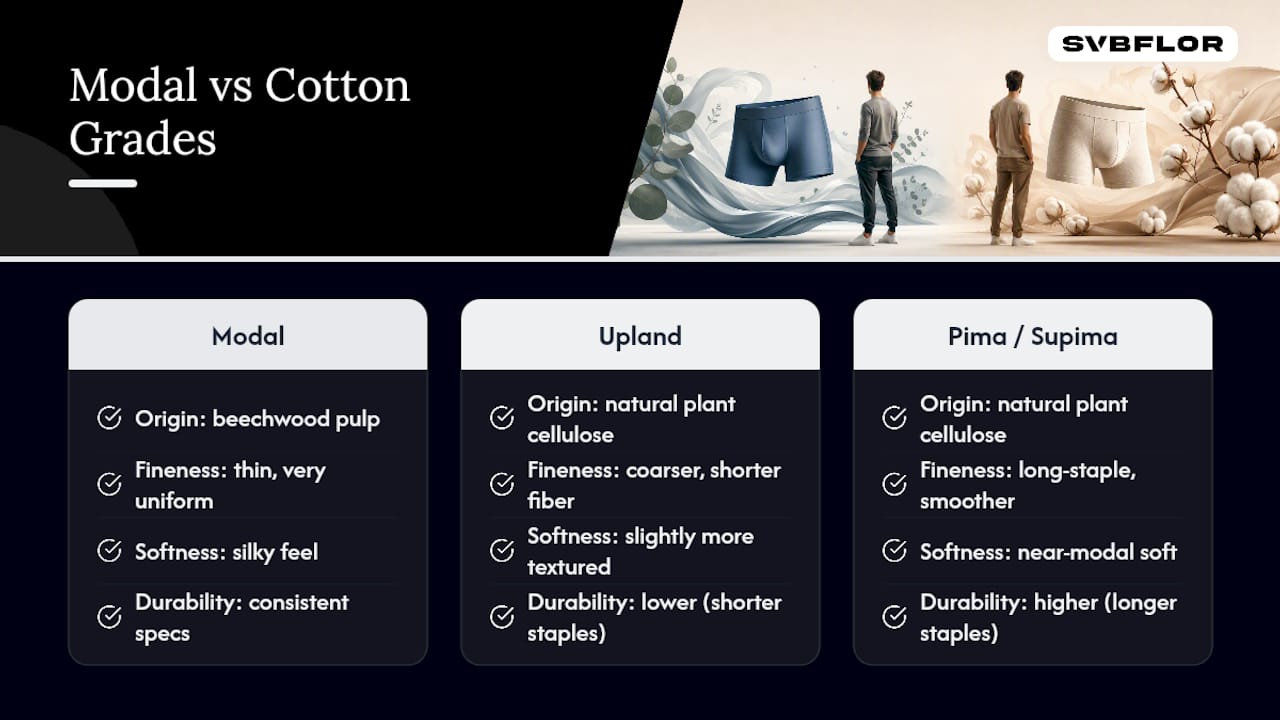
Modal starts as beechwood pulp, dissolved and regenerated into fiber through a semi-synthetic process, differing from cotton which is a natural cellulose fiber from the plant. Manufacturing controls fiber fineness, making modal filaments thinner and more uniform than many cotton fibers. This fineness contributes to modal’s silky feel compared to cotton’s slightly more textured surface.
Cotton doesn’t work off a single spec. It splits into grades, and the grade matters enormously. Standard Upland cotton, which makes up the bulk of global production, has shorter staple length and coarser fibers than long-staple varieties like Pima or Supima. That difference in filament length directly affects hand feel and durability: longer staples produce smoother yarn with fewer loose fiber ends, which means less pilling and a softer touch over time. Retail testing backs this up. Premium long-staple cottons narrow the softness gap with modal considerably compared to standard cotton, while also tolerating machine washing more forgivingly.
So when you’re comparing “modal vs cotton,” you’re really comparing an engineered fiber with tight, consistent specs against a natural fiber whose performance depends heavily on which grade you’re actually holding. A $6 cotton undershirt and a Supima cotton tee are not the same fabric experience, even though both are technically cotton.
How Modal and Cotton Perform Day to Day
Moisture is where the two fabrics diverge most sharply. Modal’s higher absorbency isn’t just a lab number. It changes how underwear feels three hours into a workout or a humid commute. Because modal moves moisture away from skin faster than cotton, wearers report less lingering dampness and less friction-driven chafing, particularly in high-movement areas like inner thighs and waistbands.
Breathability tells a more situational story. Cotton is genuinely breathable in dry heat, letting air move freely through the weave. But breathability and moisture management aren’t the same thing, and that distinction trips people up constantly. In humid climates or high-sweat activities, cotton can hold onto moisture rather than releasing it, which leaves the fabric feeling heavier and cooler against skin in an unpleasant way rather than a refreshing one. Modal-based underwear is frequently recommended for exactly these conditions, since it keeps skin drier when sweat is unavoidable.
Where the two fabrics separate over repeated wear:
- Cotton is prone to pilling in high-friction zones like waistbands and inner thighs, especially in lower-grade weaves.
- Modal, particularly engineered variants like MicroModal, shows better dimensional stability across wash cycles, meaning less shrinkage and less shape distortion.
- Dye retention tends to favor modal too. Its smoother fiber surface holds color more evenly than cotton’s slightly rougher texture, which shows up as less fading after a dozen washes.
- Cotton batches vary more from supplier to supplier, which is why two shirts from the same brand can fit slightly differently depending on which cotton lot was used.
That last point matters more than shoppers usually realize. Engineered fibers deliver consistent fit and feel batch to batch, which is a real practical advantage for anyone who’s ever bought the same underwear style twice and noticed it fit differently the second time. Cotton, being an agricultural product, simply carries more natural variation from harvest to harvest.
Washing and Long-Term Care
Cotton is the low-maintenance option here. It tolerates hot water, high heat drying, and repeated abuse better than most fabrics on the market, which is exactly why it became the default for basics in the first place. Modal asks for a gentler hand: cool or warm water, low heat or air drying, and a lighter touch overall to preserve that smooth surface.
Here’s a simple approach for extending the life of either fabric:
- Check the care label before the first wash, since blends with elastane often need cooler water than pure fiber content would suggest.
- Wash modal on a cold or delicate cycle to prevent the fiber from breaking down prematurely.
- Skip high heat drying for modal pieces, since heat is the fastest way to degrade its smooth hand feel.
- Wash cotton in warm water for routine care, reserving hot water for items that need genuine sanitizing.
- Watch the first three washes closely on any new garment. Most shrinkage and finish loss happens early, so that’s your window to catch a fit problem before it becomes permanent.
Elastane content changes this equation for both fabrics. A modal or cotton blend with 5-10% elastane generally holds shape longer through repeated stretching, but it also means the garment needs a slightly cooler wash than a 100% natural fiber version to protect the elastic fibers from breaking down.
Pro Tip: Turn modal and cotton underwear inside out before washing. It reduces surface friction against zippers and rough fabrics in the load, which cuts down on pilling for both fiber types.
Comparing the Environmental Trade-Offs
Neither fabric is environmentally neutral, and the honest comparison depends heavily on sourcing, not just fiber type. Modal originates from beechwood, a fast-growing, renewable resource, but the standard viscose-style process used to convert wood pulp into fiber involves chemical solvents that can be recovered and reused, or discharged, depending on the facility. Closed-loop production processes recover the vast majority of those chemicals for reuse, which is a meaningfully lower-impact approach than older open-loop methods still used by some manufacturers.
Cotton’s footprint runs in a different direction entirely. It’s a thirsty, land-intensive crop, and conventional cotton farming often relies on pesticides that raise questions about water contamination and soil health. Organic and long-staple cotton sourcing tends to address some of these concerns, though it typically comes at a higher price point.
If a brand claims “sustainable modal” or “eco cotton,” look for specifics rather than taking the label at face value: named certifications, transparent supplier information, and a clear description of the production process. Vague claims with no verification are a signal to dig deeper. On end-of-life, both natural cellulose fibers like modal and cotton biodegrade under the right conditions, unlike fully synthetic fibers such as polyester, though blended fabrics with elastane break down more slowly because of the synthetic component.
Who Should Buy Modal, and Who Should Stick With Cotton
Your body, your climate, and your budget matter more here than any general rule. A few buyer profiles make the decision easier:
- Active people and hot sleepers: Modal is the better call. Its moisture transfer keeps skin drier during workouts, humid commutes, or restless nights, and modal-based underwear is a common recommendation for exactly this reason.
- Sensitive skin: Modal’s smoother fiber surface creates less friction, which often means less irritation for people prone to chafing or rashes.
- Budget-conscious shoppers: Cotton wins here, especially at entry price points, since quality modal usually carries a premium.
- Anyone who wants low-maintenance laundry: Cotton tolerates more washing mistakes without lasting damage.
A well-built gusset in breathable cotton paired with a modal-blend body is a common and sensible construction choice, not a compromise.
For a practical wardrobe mix, treat modal as your targeted upgrade for the pieces you wear during activity or in humid conditions, and lean on cotton for basics that need to survive years of regular washing without complaint. Browsing fabric guidance before buying helps match the right fiber to the right use case rather than guessing from a product photo.
How SVBFLOR Builds With Modal and Cotton
Fabric choice at SVBFLOR follows the same logic laid out above, applied SKU by SKU. The SVBPIMA TRI-POUCH™ BOXERS use Pima cotton specifically because everyday boxers need to survive frequent washing without losing shape, and long-staple Pima delivers that durability while staying softer than standard Upland cotton.
The INVISIBLE SVBZERO™ Thong takes the opposite approach. Seamless construction demands a fabric that moves with the body without bunching or visible lines, which is why modal and Tencel-family fibers make sense for a piece built around disappearing under clothing.
The APEX CLASSIC FITTED TANK uses Tencel™ for a similar reason: cooling performance matters most in a fitted layer worn close to skin, and Tencel’s moisture transfer keeps that layer from feeling damp during activity.
Why the “Better Fabric” Question Misses the Point
Most comparisons treat this like a contest with one winner, and that framing sets shoppers up to make the wrong call. Modal isn’t a universal upgrade. It’s a targeted one, worth the premium for pieces that touch skin directly during heat or movement. Cotton isn’t a lesser fallback either. It’s the more forgiving, more affordable baseline that still makes sense for a huge share of your underwear drawer. The smarter question isn’t “which fabric is better,” it’s “which fabric is better for this specific piece, worn this specific way.” Buy modal where moisture and softness genuinely change your day. Buy cotton everywhere else, and don’t overthink it.
— Karina Cartwright
Shop Modal and Cotton Underwear by Use Case
SVBFLOR built its underwear lineup around the same fiber logic covered above, so you don’t have to reverse-engineer fabric specs from a product photo. If everyday durability and a dependable fit are the priority, the SVBPIMA TRI-POUCH™ BOXERS use Pima cotton built to hold up through regular washing without losing shape.
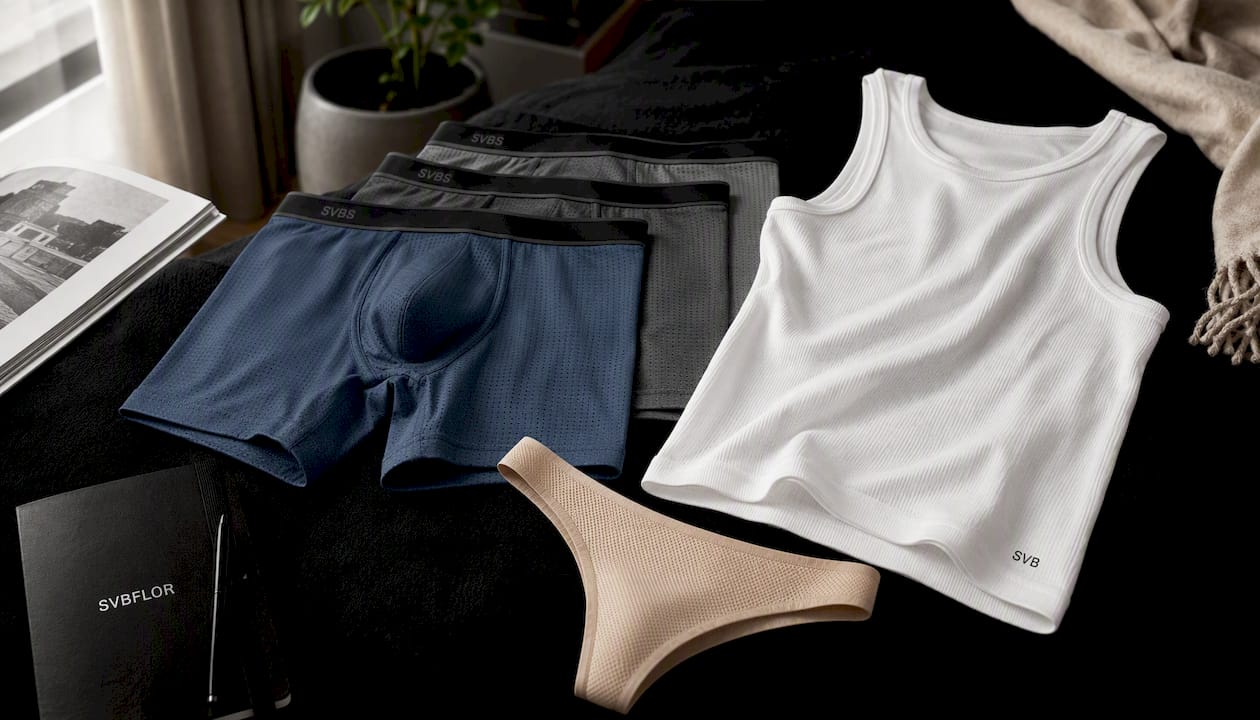
If you run hot, work out often, or just want next-to-skin smoothness with zero visible lines, the INVISIBLE SVBZERO™ Thong delivers that seamless, modal-family comfort. For a cooling layer that pairs with workouts or hot commutes, the APEX CLASSIC FITTED TANK uses Tencel™ to keep skin drier through the day. Browse the full underwear collection to match a fabric to your actual routine, whether that means stocking up on cotton basics or upgrading a few key pieces to modal.
Sources
For deeper technical detail on fiber structure, absorbency, and wash performance, these sources back the comparisons above: Lenzing’s MicroModal technical overview, Epitex’s explainer on modal’s moisture properties, Ursilk’s category breakdown of modal vs cotton, and And Circus’s analysis of micromodal in daily wear.
- Lenzing MicroModal vs Cotton: What 200+ Fabric Emergencies Taught Me About Fiber Value - Lenzing delivers Technical & Engineered Fibers
- MicroModal Fabric Explained: What Makes It Superior to Cotton?
- Modal vs Cotton: Best Fabric by Product Category
FAQ
What is the healthiest material to wear for underwear?
There’s no single “healthiest” fabric, but breathable, moisture-managing options like modal and high-quality cotton are generally favored for reducing irritation and bacterial growth. Modal’s finer fiber structure creates less friction against skin, while cotton’s natural breathability works well in dry conditions.
Is it healthy to wear modal underwear?
Yes, modal is considered a skin-friendly fabric, largely because its smooth fiber surface creates less friction than coarser fabrics. Its higher absorbency also keeps skin drier, which can reduce the moisture buildup that leads to irritation.
What underwear do gynecologists recommend?
Breathable, natural or semi-natural fibers like cotton and modal are commonly recommended over synthetic materials that trap moisture. A cotton gusset paired with a modal or cotton body is a common construction that balances breathability with comfort.
What are the disadvantages of modal fabric?
Modal typically costs more than standard cotton and requires gentler care, including cooler wash temperatures and lower heat drying. It also isn’t as universally forgiving with rough laundry habits as cotton, so it rewards a bit more attention during care.
Does SVBFLOR use modal or cotton in its underwear?
SVBFLOR uses both, matched to the job of each piece. The SVBPIMA TRI-POUCH™ BOXERS rely on Pima cotton for durability, while the INVISIBLE SVBZERO™ Thong and APEX CLASSIC FITTED TANK use modal-family fibers like Tencel™ for seamless comfort and cooling performance.

