


For everyday comfort, some boxer briefs aim to be the strongest ultra soft underwear men can buy right now. The pick comes down to three things working together: an engineered soft fabric, a Tri-Pouch™ design that supports without pinching, and knit construction built to stay soft wash after wash. Product links and full comparisons follow below.
TL;DR:
- Lyocell and micromodal fabrics outperform viscose in air permeability and shape retention, making them more durable choices for maintaining softness after multiple washes.
- Inseam length significantly affects comfort and activity suitability, with 3 to 5 inches for hot weather and quick-moving activities, and 8 inches for extended wear and chafing prevention.
- Optimal underwear fit depends on precise waist measurement, proper size selection, and checking for waistband stability, pouch shape, and inseam length after wearing.
- Long-term softness depends more on fabric construction, elastane content, and laundering habits than on fiber names alone, with proper care extending the life of delicate blends.
- Brands with detailed fiber content, accurate inseam info, and clear care instructions tend to deliver more consistent softness and durability over time.
Table of Contents
- Quick Picks: The Softest Boxer Briefs by Use Case
- What Makes Underwear “Ultra-Soft,” Really?
- Finding the Right Inseam and Fit for Your Body
- How to Choose Ultra-Soft Underwear Without Guessing
- Washing and Drying Without Wrecking the Softness
- The Fabric Science and Brand Standards Behind This Guide
- How Long Should Ultra-Soft Underwear Actually Last?
- What Ultra-Soft Underwear Actually Costs
- Does Brand Reputation and Return Policy Actually Matter?
- Where to Buy Ultra-Soft Underwear: Online vs. In-Store
- What Do Customer Reviews Reveal About Long-Term Softness?
- Measuring Yourself for the Right Size and Fit
- Why Fabric Science Beats Marketing Labels Every Time
- Ready to Upgrade Your Everyday Underwear Drawer
- Sources
- FAQ
Quick Picks: The Softest Boxer Briefs by Use Case
Not every “ultra-soft” claim means the same thing on the shelf. Some brands lean on fiber names alone; others back it up with knit construction and fit engineering. Here’s how SVBFLOR’s current lineup breaks down by what you actually need day to day.
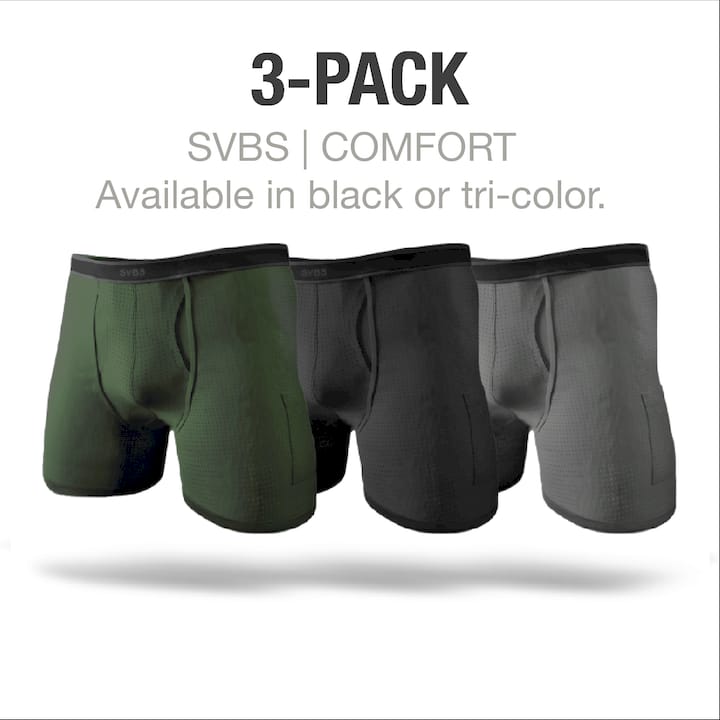
- SVBS Tri-Pouch™ Boxers | Comfort — Designed for an everyday balance of softness and structure. The blend is made for a soft hand-feel that aims to hold up through regular laundering, and the Tri-Pouch™ cut provides separation and support without a tight waistband digging in. Prices for similar products vary; check the brand’s site for current details.
- SVBPIMA Tri-Pouch™ Boxers | Pima Cotton — A natural-fiber option featuring Pima cotton, known for longer staple fibers than standard cotton. This can mean smoother yarn, less pilling, and a softer feel that may improve rather than degrade over the first several washes. Prices vary; see the brand’s site for current details.
- APEX Classic Fitted Tank | Ultra-Soft Tencel™ — Designed for layering and temperature control. This piece uses Tencel™ (lyocell) fiber for moisture handling and a fabric hand that stays smooth against skin during travel or changes in temperature. Pricing varies; check the brand’s website.
If you’re only buying one thing today, start with the comfort boxer. If cotton is non-negotiable for you, go Pima. If you want to see the fabric technology applied outside underwear, the tank shows you what it can do.
What Makes Underwear “Ultra-Soft,” Really?
Fiber name on the tag tells you less than most shoppers assume. A pair labeled “modal” can feel completely different from another modal pair, because softness is a systems property: fiber type, yarn spinning, knit structure, and finishing all interact to determine how fabric feels against skin, according to peer-reviewed textile research comparing viscose and lyocell knits. Two pairs can share a fiber and still perform nothing alike.
Lyocell, often sold under the brand name Tencel™, is a strong example. The same study found lyocell rib knits show better air permeability, more stable structure after washing, and better dimensional stability than viscose knits made from a related cellulosic fiber. That’s a meaningful gap for underwear specifically, since dimensional stability determines whether a pair still fits the same after twenty washes or has stretched and sagged.
Modal and micromodal work similarly. Elastane content matters because it’s what keeps the pouch and waistband from losing shape.
The trade-offs to know before you buy:
- Cellulosic fibers (modal, micromodal, lyocell) tend to feel softer and cooler than cotton but need gentler laundering to keep their shape.
- Pima cotton offers a softer, smoother version of a fiber you already trust, with less pilling than standard cotton over time.
- Wicking claims alone don’t guarantee dryness. Moisture management research shows evaporation and airflow matter as much as absorption, so a fabric that wicks sweat away from skin can still feel damp if it doesn’t dry quickly.
- Blends with elastane hold shape longer than 100% natural-fiber pairs, but usually cost slightly more.
Statistic Callout: Lyocell rib knits in controlled testing showed measurably better air permeability and dimensional stability than viscose knits of comparable weight, according to the MDPI wearing-quality study. That’s the science behind why Tencel-based fabric tends to keep its softness longer than cheaper cellulosic alternatives.
Beyond fiber and knit, check for OEKO-TEX Standard 100 certification, which applies specifically to garments in direct skin contact, underwear included. It won’t tell you how soft something feels, but it does tell you the fabric has been tested for harmful substances, which matters plenty when a garment sits against skin for eight hours a day.
Finding the Right Inseam and Fit for Your Body
Inseam length is the single most skipped variable in men’s underwear shopping, and it’s often the reason a “soft” pair still feels wrong once you put it on. Here’s how the common lengths break down:
- 3 to 5 inch inseam — Feels the least restrictive and works well under athletic shorts or during hot weather. Best if you dislike any fabric bunching at the upper thigh.
- 6 inch inseam — The most versatile everyday length. It sits comfortably under most pants without riding up, which is why it’s the default length on most standard boxer briefs.
- 8 inch inseam — Covers more of the thigh, which reduces chafing during long walks, cycling, or travel days spent sitting. It runs slightly warmer, so it’s less ideal for hot climates or high-output workouts.
Market data on soft boxer briefs backs this up: brands commonly offer 3.75, 5, 6, and 8 inch cuts specifically because no single inseam suits every body or activity. Picking based on your typical day, not just habit, saves you a return.
Pouch design matters just as much as length. A Tri-Pouch™ or anatomical pouch construction separates and supports without the center seam that causes friction in flatter pouch designs. Waistband width and elasticity also decide whether a pair digs in by hour six or stays invisible. Wide, low-tension waistbands generally outperform thin elastic for all-day wear, and flat-lock seams reduce the visible line and the chafe risk under fitted pants.
Quick sizing actions before you commit to a full pack:
- Measure your waist at the navel, not at the hip, and match it against the brand’s actual size chart rather than your usual pants size.
- Buy a single test pair in your expected size before ordering a multipack.
- After wearing and washing once, check for waistband rolling, pouch bunching, or fabric that’s visibly stretched out. Any of those three signals mean you need a size adjustment before buying more.
How to Choose Ultra-Soft Underwear Without Guessing
Every product page uses similar language. The way to cut through it is a short, repeatable checklist you run before adding anything to your cart.
- Fabric composition first. Look for the actual percentages, not just the headline fiber. “95% modal, 5% elastane” tells you far more than the word “modal” printed in large type.
- Inseam length second. Confirm it matches your intended use, whether that’s daily wear, workouts, or travel days.
- Pouch and seam construction third. Anatomical pouch shaping and flat-lock or tagless seams both reduce irritation points that generic reviews rarely mention.
- Waistband design fourth. Wider is usually more comfortable for all-day wear than a thin standard elastic band.
- Care instructions and return policy fifth. If a brand recommends cold water and low heat, that’s a signal the fabric is a softer cellulosic blend that needs gentler handling.
Marketing terms deserve a skeptical read. “Moisture-wicking” is frequently used as if it’s interchangeable with “stays dry,” but textile evaluations show drying speed and airflow determine how dry fabric actually feels, not absorption alone. A pair that wicks sweat but traps it near skin will still feel clammy by midday. Look for mentions of mesh panels, perforated knit zones, or quick-dry blends alongside any wicking claim, especially if you’re shopping for breathable boxer briefs for workouts or hot climates.
Pro Tip: Search a product’s reviews for the words “after washing” or “after a few wears.” That’s usually where you’ll find honest reporting on whether softness held up, since most negative reviews about ultra-soft underwear show up after the third or fourth laundry cycle, not on day one.
Red flags worth watching for: vague fiber descriptions with no percentages listed, no stated inseam measurement, and care instructions that only say “machine washable” with no temperature guidance. Those gaps usually mean the brand hasn’t tested the fabric’s long-term behavior, or isn’t willing to publish it.
Washing and Drying Without Wrecking the Softness
Care habits decide whether ultra-soft underwear stays soft for a year or turns rough and baggy after eight washes. Follow this sequence with any new pair, especially cellulosic blends like modal or Tencel:
- Test-wash one pair before committing to a full rotation. Regenerated cellulose fabrics can shrink or pill differently than expected during their first few wet processing cycles, so confirming fit and feel on a single pair protects the rest of your order.
- Wash in cold or warm water, never hot. Heat accelerates fiber breakdown in modal, micromodal, and lyocell blends far more than it does in standard cotton.
- Skip fabric softener and harsh detergents. A mild, residue-free detergent keeps fibers from stiffening over time, which is the main reason “soft” underwear starts feeling scratchy after a few months.
- Air dry or use low tumble heat. High heat is the fastest way to damage elastane content and cause permanent shrinkage in cellulosic knits.
- Reshape the waistband and pouch while still damp. This keeps the garment’s original structure instead of letting it dry into a stretched or bunched shape.
For travel, prioritize pairs made with quick-dry blends or mesh ventilation zones, since those dry overnight in a hotel sink far faster than dense cotton. If you’re rotating gear for a trip, a lightweight breathable underwear men’s option paired with something like a lightweight knit hoodie for layering keeps your whole travel kit low-maintenance and fast-drying.
The Fabric Science and Brand Standards Behind This Guide
This guide is written and reviewed under Karina Cartwright’s editorial oversight, drawing on peer-reviewed textile research and published product testing rather than marketing copy alone.
SVBFLOR products combine modern design with proprietary performance fabrics and construction methods to offer enhanced comfort, breathability, and support for daily wear and active use. Material selection and construction get applied consistently across product lines, from the Tri-Pouch™ boxer builds to layering pieces like the APEX tank, so the same fabric logic that makes one pair soft carries through the rest of the lineup.
That consistency matters more than any single product spec. A brand that treats fabric science as a starting point for every category, not just a marketing line for one hero product, is more likely to deliver the same softness experience across a Pima cotton boxer, a Tencel tank, or a seamless design like the SVBZERO™ thong, which applies similar seamless construction principles to solve a different comfort problem entirely.
How Long Should Ultra-Soft Underwear Actually Last?
Softness fades before structure usually fails, and knowing which one you’re noticing changes what you should do about it. A well-made pair built from modal, micromodal, or Tencel with adequate elastane content should hold its shape and softness through regular wear and washing for a year or more with proper care, though heavy daily rotation and high-heat drying shorten that window considerably.
The fiber and construction quality discussed earlier directly predicts this. Pairs built on cellulosic fibers with better dimensional stability, the kind demonstrated in lyocell rib knit testing, resist the stretching and shape loss that make older underwear feel rough and baggy at the waistband. Cheaper viscose blends without that structural advantage tend to lose their shape and softness faster, even if they felt identical on day one.
The most reliable sign a pair is near the end of its life isn’t visible holes. It’s a waistband that no longer springs back, a pouch that’s lost its shape, or fabric that feels thinner and stiffer than it did new. Any of those three is a better replacement trigger than a calendar date, since wear frequency and laundering habits vary so much from one guy to the next.
What Ultra-Soft Underwear Actually Costs
Prices for genuinely soft, well-constructed boxer briefs generally run from around $20 for basic modal blends up to $60 or more for premium Pima cotton or Tencel-based options with reinforced pouch construction. SVBFLOR’s own Tri-Pouch™ lines, both the Comfort boxer and the Pima cotton version, sit at $59 for a multipack, which lands solidly in the premium-value range once you factor in cost per wear.
That per-wear math is where the real comparison happens. A $15 three-pack of basic cotton briefs that loses its shape and softness within six months costs you more over two years than a $59 pack that holds up for eighteen months or longer. Cheaper options aren’t necessarily a bad deal, but they usually trade long-term softness retention for a lower sticker price, and that trade only makes sense if you’re comfortable replacing underwear more often.
Mid-range options, often in the $25 to $40 window, tend to use single-fiber blends without the reinforced construction found in premium lines. They’re a reasonable middle ground if you want better softness than basic cotton without paying premium prices, but check the fabric composition and inseam details closely since quality varies more in this tier than in either the budget or premium ranges.
Does Brand Reputation and Return Policy Actually Matter?
Return and exchange policies matter more for underwear than almost any other apparel category, simply because fit and fabric feel can’t be judged from a photo. A brand willing to accept exchanges on unworn, tagged items signals confidence in its own sizing charts and fabric claims.
Look for brands that publish clear care instructions alongside their product specs, not just a generic “machine washable” tag. That level of detail, paired with published fiber percentages and inseam measurements, tends to correlate with brands that have actually tested their fabric’s long-term behavior rather than repeating a supplier’s marketing language. Product-testing sites that rate boxer briefs for comfort and durability, like OutdoorGearLab’s tested rankings, consistently point to the same combination: fabric quality, waistband engineering, and pouch construction working together, not any single feature in isolation.
Warranty coverage is rare in this category since underwear is a consumable, but a reasonable return window on unworn items in original packaging is the standard worth expecting from any brand you’re trusting with a multipack order.
Where to Buy Ultra-Soft Underwear: Online vs. In-Store
Online shopping gives you the fuller picture for underwear specifically, since brand websites publish exact fabric composition, inseam measurements, and care instructions that most physical retailers simply don’t display on the shelf tag. You can also read composition percentages and compare pouch construction details before buying, which is harder to do standing in a store aisle.
Physical stores offer the one thing online can’t: touching the fabric before you commit. If you’re deciding between a cotton feel and a modal blend for the first time, a quick in-store feel test helps you calibrate what “ultra-soft” means to your own hands before ordering online going forward.
The practical approach many shoppers land on: buy your first pair or pack from a brand’s own underwear collection online, where fabric details are fully documented, and use that first purchase to decide whether to reorder the same fabric type or try something like a Pima cotton pack next time.
What Do Customer Reviews Reveal About Long-Term Softness?
The most useful reviews aren’t the five-star ones posted the week a product arrives. They’re the reviews posted two or three months later, mentioning whether the fabric held up through repeated washing.
Patterns worth searching for in review sections: mentions of “still soft after,” complaints about waistband rolling or fabric thinning, and comments specifically addressing whether the pouch construction held its shape. Reviews that mention specific wash counts or timeframes carry more weight than generic star ratings, since they tell you exactly when, if ever, the softness started to fade.
Independent product-test roundups add a layer reviews alone can’t, because they test multiple pairs under controlled conditions rather than relying on individual wear habits. The consistent finding across these tests: comfort comes from fabric, waistband, and pouch design working together, which is exactly what testing sites like OutdoorGearLab report when ranking boxer briefs for long-term comfort rather than first impressions.
Measuring Yourself for the Right Size and Fit
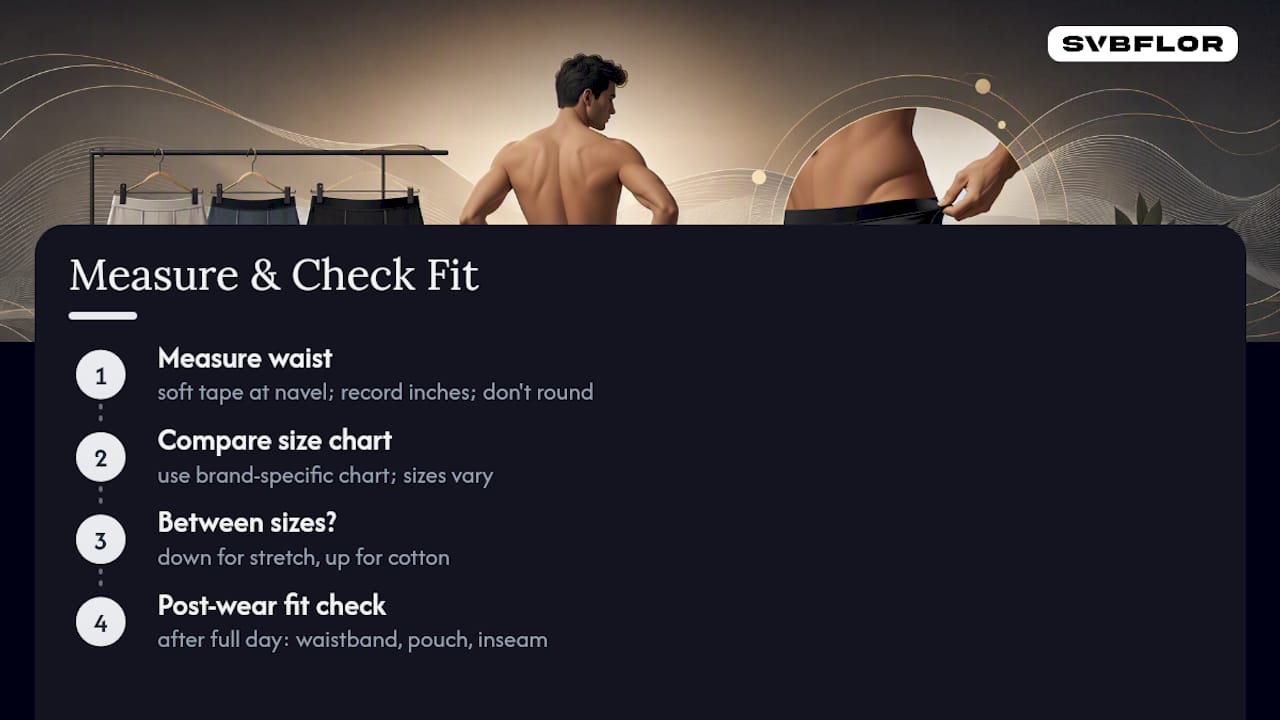
Getting sizing right on ultra-soft underwear starts with a real waist measurement, not a guess based on your jeans size. Wrap a soft tape measure around your natural waistline, roughly at navel height, and note the number in inches rather than rounding up for comfort margin, since most brand size charts already build in stretch allowance.
Compare that number against the specific brand’s size chart, since sizing varies enough between brands that a medium in one line can fit like a large in another. If you fall between two sizes, sizing down usually works better for stretch fabrics like modal or Tencel blends, since the elastane content is designed to accommodate movement without losing shape, while sizing up tends to suit stiffer, less elastic cotton blends.
Once the size arrives, check three fit points after wearing for a full day: whether the waistband stays flat without rolling, whether the pouch holds its shape without bunching, and whether the inseam length matches what you expected from the product description. Any mismatch in those three areas points to a specific fix, whether that’s a different size or a different inseam length entirely, rather than writing off the whole fabric type.
Why Fabric Science Beats Marketing Labels Every Time
The conventional shopping advice, look for “modal” or “bamboo” on the label and call it done, undersells how much construction actually matters. Two pairs sharing a fiber name can behave completely differently after ten washes, and that gap almost always traces back to yarn quality and knit structure rather than the fiber itself.
What gets overrated in this category is the hero-fiber claim standing alone. What gets underrated is the boring stuff: elastane percentage, seam placement, and whether a brand publishes actual care instructions instead of a generic tag. Those details predict two years of comfort far better than any single fiber name does.
If you’re prioritizing one thing before your next purchase, make it this: read the composition percentages before the marketing copy. Comfortable underwear men actually keep wearing past month three is built on those unglamorous specifics, not the word printed largest on the tag.
— Karina Cartwright
Ready to Upgrade Your Everyday Underwear Drawer
Everything in this checklist, fabric composition, inseam length, pouch construction, care instructions, points toward one practical next step: pick the pair that matches your actual daily use instead of guessing off a product photo. SVBFLOR built its Tri-Pouch™ line around exactly that logic, engineering fabric and construction together instead of bolting a soft-sounding fiber name onto a standard cut.
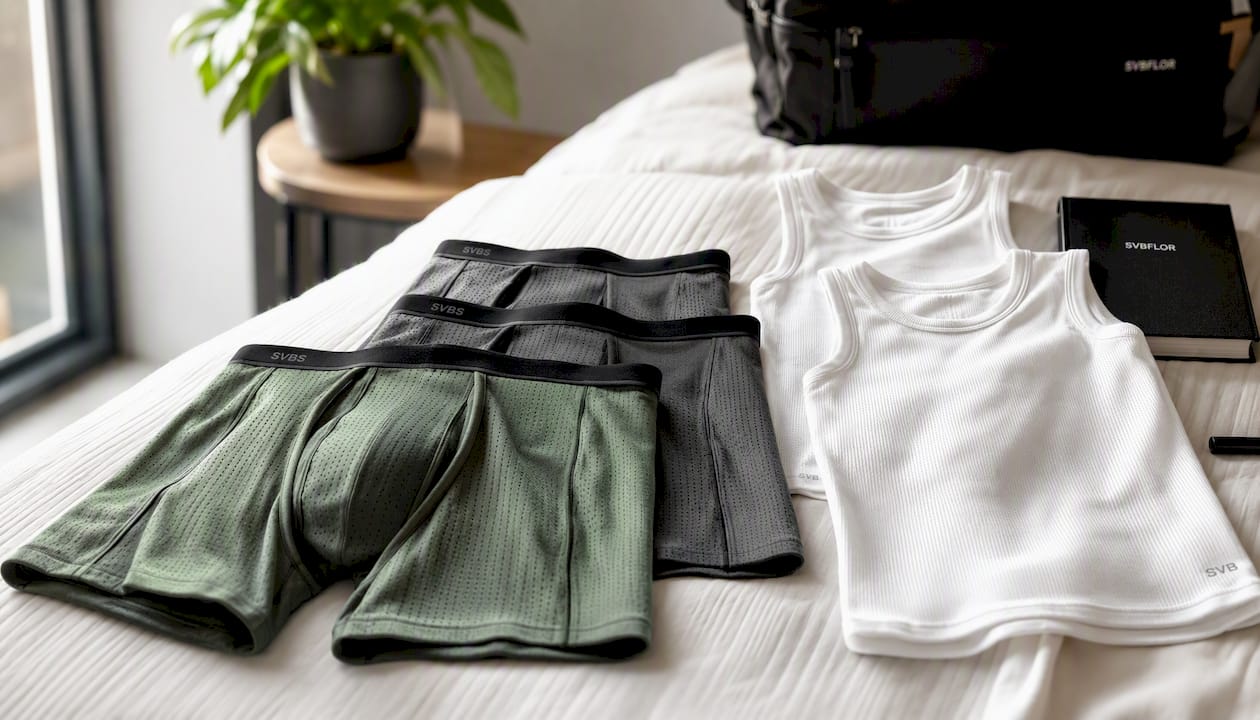
If daily comfort and easy care top your list, consider boxer briefs like the SVBS Tri-Pouch™ Boxers. For a natural-fiber feel, options like the SVBPIMA Pima cotton version offer a smoother, longer-staple cotton feel as described in this guide. Prices vary; please check the brand’s site for current details. Pair either with the APEX Tencel™ tank for layering or browse the full underwear collection to compare every current fit and fabric side by side. Unworn, tagged items are eligible for exchange if the size or fit isn’t right once it arrives, so ordering your first pair carries minimal risk.
Sources
- Wearing Quality of Ribbed Knits Made from Viscose and Lyocell Fibers for Underwear
- OEKO-TEX STANDARD 100 standard
- Evaluation of thermal and moisture management properties on knitted fabrics and comparison with a physiological model in warm conditions
- Best Boxer Briefs for Men of 2026 | Tested & Ranked
FAQ
What Is the Softest Material for Underwear?
Micromodal and lyocell (Tencel™) generally feel softer than standard cotton because of finer fiber diameter and smoother yarn structure. Pima cotton is the softest widely available cotton option thanks to its longer staple fibers, which reduce the roughness and pilling common in standard cotton blends.
What Underwear Do Urologists Recommend?
Breathable, moisture-managing fabrics with a supportive but non-restrictive fit are the general guidance, since airflow and quick drying help reduce prolonged moisture against skin. Loose-fitting boxer briefs with mesh or ventilated knit zones, rather than tight synthetic fabric that traps heat, are typically favored over styles that restrict airflow for extended periods.
How Do I Know If Underwear Will Stay Soft After Washing?
Check the fabric composition for elastane content and look for care instructions specifying cold water and low heat, since hot water and high heat degrade cellulosic fibers faster than cotton. Test-washing a single pair before committing to a multipack is the most reliable way to confirm post-wash softness and fit.
Are Mesh Boxer Briefs Better for Active Use?
Mesh panels and perforated knit zones improve airflow and drying speed, which matters more for active use than wicking claims alone. Since moisture management research shows evaporation and airflow determine dryness as much as absorption does, mesh or vented designs tend to outperform dense knit fabric during workouts or hot weather.

