


Yes, a sports bra can absolutely be worn all day. The rule that makes it work: pick a snug, soft band, wire-free or gently encapsulated support, and breathable fabric over compression or hardware. Some sports bra styles follow this exact formula, built for desk hours, errands, and workouts without a costume change in between.
TL;DR:
- A comfortable all-day sports bra should have a wide, bonded band that distributes pressure evenly around the ribcage to prevent digging or riding up.
- Encapsulation or hybrid support systems are preferred for long hours, as they offer better breathability and weight distribution compared to simple compression bras.
- Fabric choices like moisture-wicking, high-recovery nylon-spandex blends, and seamless construction features such as flatlock seams improve comfort and durability over repeated wears.
- Proper fit involves a snug band that stays level without riding up, cups that neither gapped nor spill, and straps that support without digging or slipping during movement.
- Rotating multiple bras and following elastic and fabric wear signs can extend the lifespan of an all-day sports bra, ensuring continued support and comfort.
Table of Contents
- What to Look for in an All-Day Sports Bra
- How to Fit and Size an All-Day Sports Bra
- Fabrics and Construction Choices That Influence All-Day Comfort
- Map Your Day to the Right Support Level
- How to Wash, Store, and Know When to Replace Your Sports Bra
- How to Style an All-Day Sports Bra for Work, Travel, and Casual Wear
- SVBFLOR Spotlight: Which Styles Fit the All-Day Brief
- Durability and Lifespan of an All-Day Sports Bra
- Price Range and Value Assessment for All-Day Sports Bras
- What Actually Matters When You Buy an All-Day Sports Bra
- Shop All-Day Comfort Designed by SVBFLOR
- Sources
- FAQ
What to Look for in an All-Day Sports Bra
Comfort and support pull in different directions more often than people expect. A bra engineered purely for high-impact compression usually sacrifices the softness your skin needs after hour six. An all-day sports bra for daily wear has to split the difference, and the details that make that possible show up in construction, not marketing copy.
Band construction is where all-day comfort starts. Look for a wide, soft band with bonded or covered edges rather than exposed elastic. Exposed elastic digs into skin around hour four; a bonded edge distributes pressure evenly across the ribcage instead of concentrating it in one line.
Seams and tags matter more than people assume. Tagless panels and flatlock or laser-cut seams keep fabric from rubbing raised ridges into skin over repeated motion, whether that motion is a commute or a spin class.
Support systems fall into three categories, and picking the right one depends on your day, not just your workout:
- Compression bras press breast tissue against the chest wall. They’re simple, low-profile, and good for low-impact days, but they can feel restrictive over eight-plus hours.
- Encapsulation bras use individual cups for shape and support. They tend to breathe better and distribute weight more evenly, which usually makes them the better pick for all-day wear.
- Hybrid designs blend both systems, offering moderate support with the comfort profile of encapsulation. This is the sweet spot most everyday sports bras aim for.
Fabric priorities come next. Moisture-wicking, quick-dry blends keep skin dry through a full workday of temperature swings, from an air-conditioned office to a humid subway platform. A soft hand feel (how the fabric actually feels against skin, not just its stretch percentage) determines whether you notice the bra by 3 p.m. or forget it’s there.
Sizing ties all of this together. The band should feel snug, not just fits without gapping, but you should be able to slide two fingers underneath comfortably. If you’re stretching the band to close it or if it rides up your back, you’re in the wrong size regardless of how the cups fit.
How to Fit and Size an All-Day Sports Bra
Getting the fit right the first time saves you from months of adjusting straps in a bathroom stall. A few testable checks catch most sizing mistakes before you leave the fitting room, or before you order online and regret it.
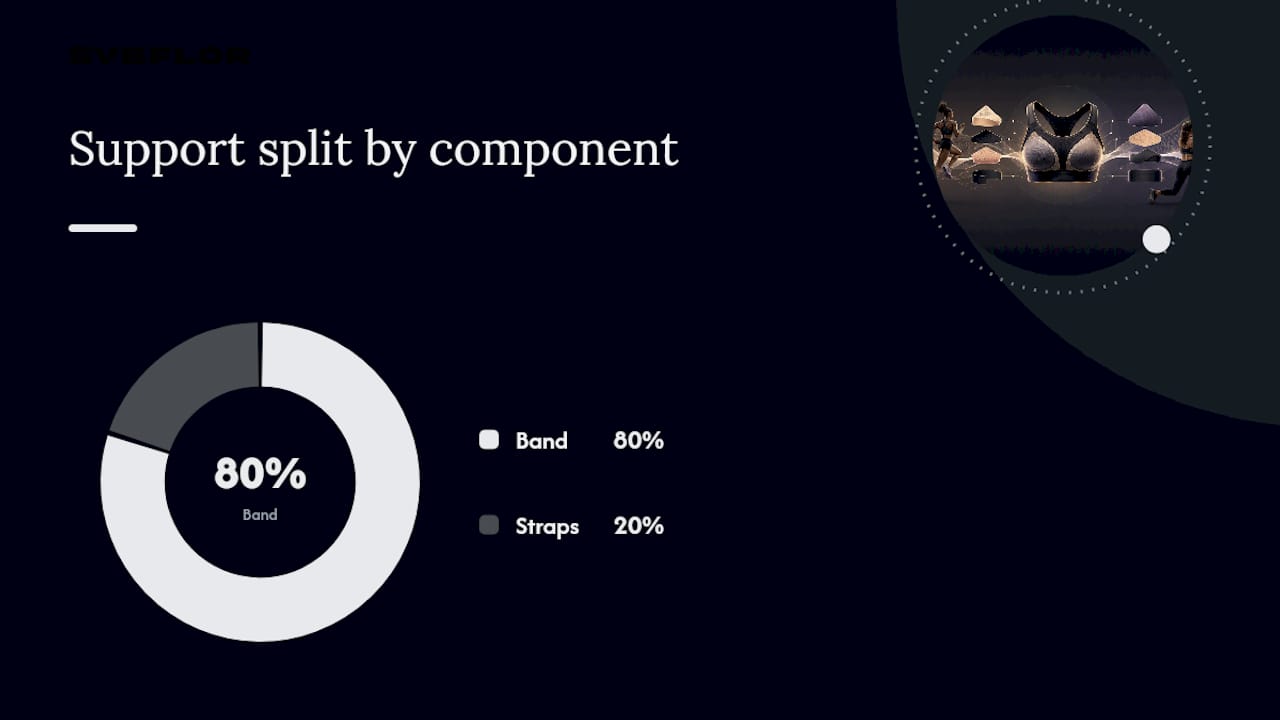
- Run the band test first. The band, not the straps, does roughly 80% of the support work in a well-fitted bra. Stand straight, fasten the bra on the loosest hook, and check that it sits level around your ribcage without riding up in the back. If it rides up, size down the band.
- Check the cups for gapping or spillage. Smooth fabric with no wrinkling means the cup size is right. Gapping means size down in the cup; spillage at the sides or top means size up.
- Decide between numbered sizing and S/M/L. Bralette-style and compression bras often use S/M/L, while encapsulation and hybrid styles typically use standard band/cup sizing (32B, 34C, and so on). If you’ve been sized in a traditional bra before, start from that number and adjust from there.
- Test the straps under load. Raise your arms overhead and swing them side to side. Straps that dig in are too tight; straps that slip off the shoulder are too loose or too far apart for your frame.
- Move through a full range of motion. Bend, reach, and twist before buying. A bra that looks perfect standing still can still ride up or shift once your body is actually in motion.
Common problems have simple fixes. Riding up in the back almost always means the band is too loose, size down before blaming the straps. Side spillage near the armpit usually means the cup or wing is too narrow, so look for a style with wider side panels or size up in the cup.
Pro Tip: If you’re between two band sizes, size down. Elastic loosens with wear and washing, so a snug new bra becomes a comfortable broken-in bra within a few wears, not a tight one.
Fabrics and Construction Choices That Influence All-Day Comfort
Fabric choice determines whether a bra still feels good at hour ten or has turned into something you’re mentally counting down to remove. Nylon and spandex blends with high recovery hold their shape wash after wash, which keeps the band from stretching out prematurely and losing the support that made it comfortable in the first place.
Construction details reduce irritation in ways that aren’t obvious until you’ve worn the wrong bra for a full shift:
- Flatlock seams lie flush against skin instead of creating a raised ridge that rubs with every arm movement.
- Bonded edges replace traditional elastic binding, eliminating one of the most common friction points around the band and armholes.
- Minimal hardware means fewer clasps, rings, and adjusters pressing into skin under a fitted top or blazer.
- Mesh panels at the back or underarm add ventilation exactly where heat and moisture build up fastest.
Runner’s World’s testing of top sports bras consistently flags flat seams and soft bands as the features testers notice first, and the ones that make or break comfort over repeated wear. OutdoorGearLab’s rankings echo the same pattern: band elasticity and seam placement separate bras people actually reach for daily from ones that get worn once and shelved.
Breathability compounds over the course of a day in a way a single morning try-on won’t reveal. A bra that feels fine in a 68-degree fitting room can feel very different after a warm commute, a flight of stairs, and an afternoon at a desk with the heat running. Mesh venting and moisture-wicking fabric matter more the longer the bra stays on, which is precisely the use case an all-day sports bra needs to solve. Broader guidance on breathable blends for high-sweat activity points to the same conclusion: minimal hardware and airy fabric construction consistently outperform heavier, structured builds when comfort has to last for hours, not minutes.
Map Your Day to the Right Support Level
Different days call for different support levels, and matching the two is the fastest way to stop fighting with your bra by mid-afternoon.
- Desk day with light walking: Choose light-to-medium support in a wire-free or soft-encapsulation style. You want something that disappears under a blouse and doesn’t fight your posture while you sit for hours. A wireless bralette style works well here since compression isn’t the priority, comfort is.
- Active day with a run or HIIT class: Step up to medium-to-high support. If your day includes a genuine workout, consider swapping into a dedicated performance bra for that window and switching back afterward. Trying to make one bra do both jobs usually means it does neither one particularly well.
- Travel or mixed-activity days: Prioritize breathable, low-profile styles with easy on/off design, pullover styles without clasps that dig into your back on a plane seat. Look for adjustable straps so you can loosen or tighten as swelling and activity levels shift over a long travel day.
The mismatch that trips people up most is wearing a high-compression bra all day when the day itself is low-impact. Discomfort at 6 p.m. is often just support mismatched to activity, not a defective bra.
How to Wash, Store, and Know When to Replace Your Sports Bra
Elastic is the first thing to go, and how you wash your bra determines how fast that happens. Machine wash cold on the gentle cycle, or hand wash when you have time, and skip the dryer’s high heat entirely. Heat breaks down the elastic fibers that give the band its recovery, which is the exact property that makes a bra supportive in the first place.
Wash frequency depends on how you wore it. A bra worn through a sweaty workout needs washing after every use; one worn for light daily comfort under a blouse can go two or three wears between washes without issue.
Retirement signs are easy to spot once you know what to check:
- The band no longer snaps back after you stretch it. This is the clearest sign support is gone.
- Odor persists after washing, which usually means bacteria have worked into the fibers.
- Fabric looks thin or sheer in high-stress areas like the band and cups.
Run a simple elasticity test: stretch the band gently and let go. If it springs back to its original shape immediately, it’s still doing its job. If it stays stretched or takes a few seconds to recover, the elastic has broken down and the bra has moved from “supportive” to “just fabric.” Independent testers at OutdoorGearLab flag band elasticity as the single biggest factor in whether a bra still delivers multi-hour support, more than fabric color, cup style, or brand name.
How to Style an All-Day Sports Bra for Work, Travel, and Casual Wear
Wearing a sports bra all day doesn’t mean sacrificing how you look. A few styling choices keep it invisible under work clothes while staying comfortable enough to forget about.
- Under blouses and blazers, choose low-profile seams and neutral colors like black, ivory, or nude so nothing shows through lighter fabrics.
- Layer with intention for coverage and visibility, a fitted tank under a cardigan, or a cropped tee over a bralette, works for casual days without adding bulk.
- Build a travel outfit around breathability: a soft, wire-free bra, a quick-dry top, and wrinkle-resistant layers on top handle airport heat, cabin chill, and everything in between.
- Plan your gym-to-office transition by choosing a bra supportive enough for a quick workout but low-profile enough to go straight into office wear without changing, pairing it with breathable tops that layer easily over either look.
The goal is a bra that works as hard styling-wise as it does support-wise, so you’re not choosing between looking put-together and feeling comfortable.
SVBFLOR Spotlight: Which Styles Fit the All-Day Brief
Certain bra lines are built around the criteria covered above: soft bands, minimal hardware, and fabric that breathes through a full day rather than just a workout. Each of the following styles solves for a slightly different version of “all day.”
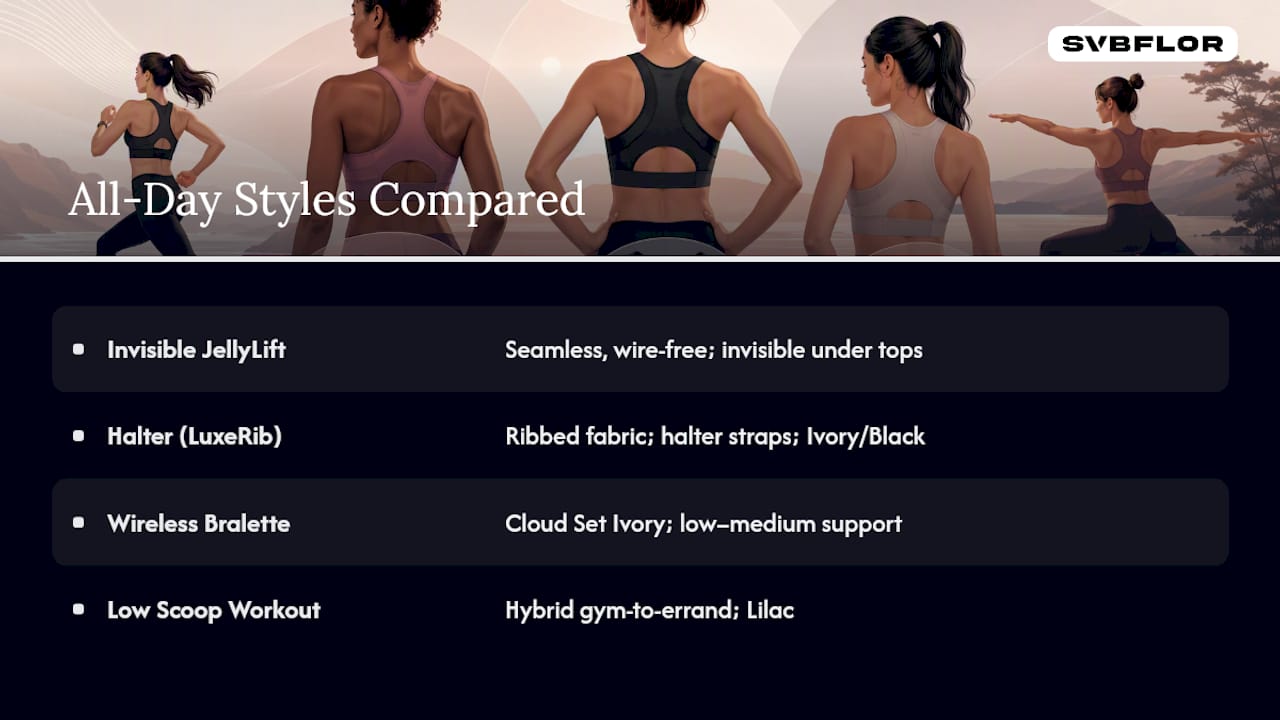
The INVISIBLE JellyLift Bra is built seamless and wire-free, which addresses the two biggest complaints about all-day wear at once: no underwire pressing into ribs, and no seam lines showing through fitted tops. It’s designed for desk days and travel, where invisibility underclothing matters as much as the support itself, and its soft-encapsulation build keeps shape without the rigidity of a traditional structured bra.
The Halter Bra in LuxeRib™ Ivory and its LuxeRib™ Black counterpart use a ribbed fabric construction that holds its shape through repeated wear while staying soft against skin. The halter strap style distributes weight across both shoulders more evenly than thin straps, which matters on days that stretch from morning errands into an evening workout. Ivory works well layered under lighter summer fabrics; black is the more versatile pick for year-round wear under darker layers.
For readers who prefer a lighter, bralette-style option, SVBFLOR’s wireless bralette in Cloud Set Ivory fits the low-to-medium support end of the spectrum, best suited to desk days and casual wear rather than high-impact training. And for hybrid workout-to-errand days, the Low Scoop Workout Bra in Lilac bridges a gym session and a coffee run without a wardrobe change.
Durability and Lifespan of an All-Day Sports Bra
An all-day sports bra doesn’t fail all at once. It degrades gradually, and the timeline depends heavily on how often it’s worn and washed, not just its price point or brand.
Elastic fibers are the first component to weaken, usually well before fabric shows visible wear. A bra worn and washed several times a week will lose band recovery faster than one worn occasionally, which is why rotating between two or three bras extends the useful life of each one considerably. Giving elastic 24 hours to recover between wears matters more than most people realize.
Fabric thinning tends to show up next, typically at the band and underarm areas where friction concentrates during movement. Once you can see light through the fabric in those spots, the moisture-wicking and shaping properties have usually already broken down even if the bra still looks wearable from a distance.
The honest signal to retire a bra isn’t a calendar date. It’s the elasticity test described earlier: stretch the band, watch how fast it recovers. A bra that no longer snaps back has moved past supportive and into simply covering, and no amount of careful washing brings that recovery back once it’s gone.
Price Range and Value Assessment for All-Day Sports Bras
All-day sports bras generally span a wide price range, from budget basics under $20 to premium performance styles well over $60, and price alone is a poor predictor of comfort. The features that actually determine all-day wearability, band construction, seam finish, fabric blend, show up at multiple price points, which means the smarter comparison is feature-by-feature rather than price-tier by price-tier.
Where price tends to track real value is in fabric recovery and construction durability. A bra with high-recovery spandex blends and bonded seams typically holds its shape through more wash cycles than a basic cotton-blend option, which changes the actual cost per wear even when the sticker price is higher upfront.
For shoppers weighing SVBFLOR against that range, the INVISIBLE JellyLift Bra is priced within the SVBSKIN™ line at $25, positioning it in the middle of the market for a seamless, wire-free construction built specifically around all-day comfort criteria rather than pure athletic compression. The Halter LuxeRib styles sit in the same tier. Value, in this category, comes down to whether the construction matches your actual day, not whether you spent the most available.
What Actually Matters When You Buy an All-Day Sports Bra
Most advice on this topic treats comfort and support as if you have to rank them, pick one, and live with the trade-off. That framing is outdated. The real skill is matching support level to your actual day, not your workout schedule, since most people’s days involve far more sitting, walking, and commuting than they do training.
I’d also push back on the idea that a “good” bra is the one with the most support features. Encapsulation, wide bands, and moisture-wicking fabric matter, but only if the fit is right first. A perfectly engineered bra in the wrong band size will underperform a simpler design that actually fits your body. Get the fit right before you chase features.
Run the band test, check the cups for gapping, and match support to your day, not your gym schedule. That checklist solves more comfort complaints than any single fabric technology ever will.
— Karina Cartwright
Shop All-Day Comfort Designed by SVBFLOR
Some brands build every bra around similar standards covered throughout this guide: soft bands over compression, breathable fabric over synthetic bulk, and minimal hardware so nothing digs in by hour six. This differs from some performance-first brands, which design primarily for workouts and hope the rest of the day works itself out.
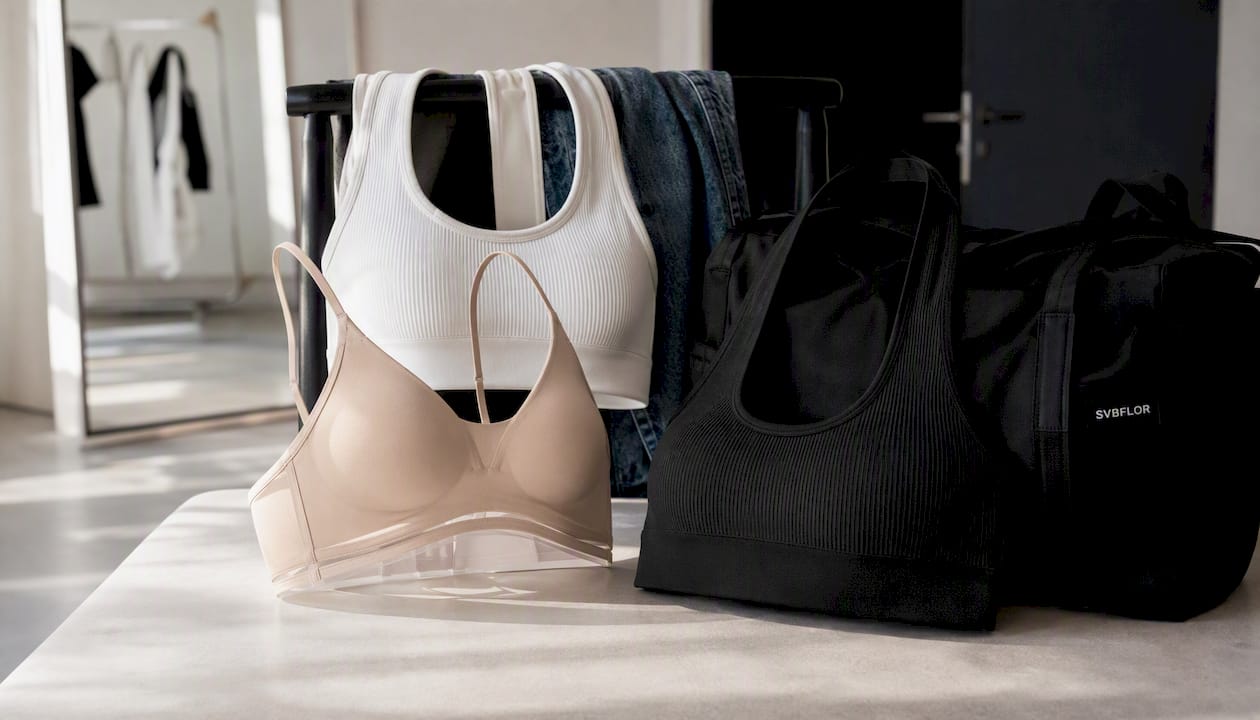
The INVISIBLE JellyLift Bra is the clearest example: seamless, wire-free, and priced at $25 within the SVBSKIN™ line, built for exactly the desk-to-errands-to-evening stretch this guide walks through. If a halter silhouette fits your wardrobe better, the Halter Bra in LuxeRib™ Ivory offers the same comfort-first construction in a strap style built for even weight distribution across long days. Browse either page, check your size against the fit checks above, and add the one that matches your actual daily routine to your cart.
Sources
The claims in this guide draw on hands-on testing and construction analysis from independent reviewers and brand sources:
FAQ
What Is the Best Sports Bra for All-Day Wear?
The best all-day sports bra combines a snug, soft band, wire-free or hybrid support, and breathable fabric that resists moisture buildup over many hours. Styles like the INVISIBLE JellyLift Bra follow this exact profile, prioritizing seamless comfort over pure compression.
Can a Sports Bra Be Worn All Day?
Yes, as long as the fit is correct and the construction favors comfort over aggressive compression. A bra with a properly snug band, soft edge finishes, and breathable fabric can comfortably carry you from morning to evening without needing a swap.
What Is the Best Sports Bra for Daily Wear?
Daily wear favors wire-free or hybrid-support styles with minimal hardware and moisture-wicking fabric over high-compression performance bras. Halter styles, like the Halter LuxeRib™ Ivory, work well because the strap design distributes weight evenly across a full day of mixed activity.
What Is the Three-Bra Rule?
The three-bra rule suggests rotating between at least three sports bras so elastic fibers get time to recover between wears, extending each bra’s lifespan considerably. Wearing the same bra daily without rotation speeds up band breakdown and shortens how long it delivers real support.

