


Pick the sock size that matches your shoe-size range, or measure heel to longest toe if you want to double-check. Most socks size by S/M/L/XL ranges tied to shoe size, not exact foot length. When you fall between two sizes, size up for a cushioned crew and size down for a snug performance fit. Length and cushion level change how a sock feels even at the correct size.
TL;DR:
- Sock sizes are based on shoe-size ranges, with most brands using S/M/L/XL labels that cover broad shoe size bands.
- Measuring foot length at the end of the day provides the most accurate fit when selecting sock size, especially for wide or high-volume feet.
- Sock length impacts fit and activity suitability, with ankle socks ideal for casual wear and crew or knee-highs better for sports or cold weather.
- Cushioned or performance socks often require sizing up to accommodate extra volume and padding, while ultralight styles fit closer to the foot.
- Checking brand-specific sizing charts and considering material stretch recovery helps avoid long-term fit issues, especially for performance or wide-fit socks.
Table of Contents
- Sock Size Guide: Standard Charts for Men, Women, and Kids
- How to Measure Your Feet for the Right Sock Size
- Ankle vs Crew vs Quarter vs Knee: Which Sock Length Do You Need?
- What Affects Sock Fit Beyond the Size Chart
- SVBFLOR Sock Sizing: Which Style Fits Your Shoe Size
- Do Compression and Athletic Socks Size Differently?
- What Sizing Charts Get Wrong
- Ready to Shop? Check Your Size First
- Sources
- FAQ
Sock Size Guide: Standard Charts for Men, Women, and Kids
Sock sizing runs on shoe-size ranges, not inches. Most brands use S/M/L/XL labels, and each one covers a band of shoe sizes wide enough to fit slightly different foot shapes. Nike’s unisex sock chart maps sizes from XS to 2XL against US, UK, and EU shoe sizes, and it’s one of the clearest manufacturer references available. Running Warehouse publishes similar SM/MD/LG/XL crosswalks that match what you’ll see on most athletic sock packaging.
Here’s a general sock sizing chart that reflects the ranges you’ll find across most mainstream brands:
| Size Label | Men’s Shoe Size (US) | Women’s Shoe Size (US) | Fit Note |
|---|---|---|---|
| Small (S) | 4 to 8.5 | 5 to 8.5 | Narrow to average width |
| Medium (M) | 4 to 8.5 | 9 to 12 | Good for in-between sizes |
| Large (L) | 9 to 12 | 12.5 to 15 | Standard width, room to spare |
| X-Large (XL) | 12.5 to 15 | 9 and up | Best for wide or high-volume feet |
Kids’ socks follow their own scale, usually broken into toddler (4 to 8.5), youth small (9 to 12), youth medium (12.5 to 3), and youth large (3.5 to 7), since children’s feet grow fast and shoe sizes reset between age groups.
EU and UK conversions shift these ranges slightly. A US men’s size 9 lands around EU 42 and UK 8, but the exact cutoff varies by brand, so treat any universal chart as a starting point rather than gospel. One brand’s medium can be another’s large, which is exactly why checking the specific product page before buying saves you a return.
How to Measure Your Feet for the Right Sock Size
Shoe size gets you close, but a direct foot measurement settles any doubt. wikiHow’s sizing method uses a simple standing measurement that takes less than two minutes:
- Place a ruler or tape measure flat on the floor against a wall.
- Stand with your heel touching the wall end of the ruler.
- Note the measurement at your longest toe, which isn’t always the big toe.
- Repeat on your other foot, since most people have one foot slightly longer.
- Use the larger of the two measurements to choose your sock size.
Once you have a number in inches or centimeters, match it against the sizing chart on the specific brand’s page rather than a generic conversion table. If your measurement lands exactly on the line between two sizes, shoe-size range is usually the better tiebreaker; measurement works best when your foot is unusually narrow, wide, or long for your shoe size.
Being between sizes isn’t a rare edge case. It happens to a large share of shoppers, and the fix depends on what you want from the sock. Size up if you want more cushion or a relaxed fit. Size down if you’re after a compression-style, snug feel for running or training, and check whether the material has stretch. Cotton blends hold their shape less than nylon or spandex blends, so a stretchy sock in your smaller size often performs better than a loose one in the larger size.
Pro Tip: Measure your feet at the end of the day, not first thing in the morning. Feet swell slightly with standing and activity, and an evening measurement keeps you from buying socks that feel tight by dinnertime.
Ankle vs Crew vs Quarter vs Knee: Which Sock Length Do You Need?
Sock length changes both how the sock fits and what it’s good for, independent of size label. Getting the length right matters as much as getting the size right.
- Ankle socks sit at or just above the ankle bone, work well with low-cut sneakers, and suit warm weather or casual wear.
- Quarter socks rise a bit higher than ankle length, covering the lower shin slightly, and split the difference between ankle and crew.
- Crew socks reach mid-calf and are the standard choice for training shoes, boots, and everyday wear where you want more coverage.
- Knee-high or over-the-calf (OTC) socks extend to just below the knee and are common for compression wear, dress socks, and cold-weather activities.
Activity and terrain matter more than personal preference here. Performance guidance from Men’s Health recommends ankle socks for road running because they’re lighter and breathe better, while crew socks work better for trail running since the higher cuff keeps dirt, gravel, and debris out of your shoe. That same logic extends to hiking versus casual gym use: more exposure to the elements calls for more coverage.
What Affects Sock Fit Beyond the Size Chart
A size label only tells part of the story. Cushion level changes how a sock fills your shoe. Thicker cushioned socks, like anything built for running or hiking, take up more volume inside your shoe, so if you’re between sizes, sizing up usually gives cushioned styles room to work without cutting off circulation at the arch. Ultralight or no-show socks fit closer to the foot by design, so sizing down or staying true to your measured size makes more sense there.
Material blend affects long-term fit, too. Socks with strong elastic recovery, usually a nylon or spandex blend, bounce back to their original shape wash after wash. Cotton-heavy socks stretch out faster and can feel loose well before they wear through.
- Wide or high-volume feet do better in a brand’s dedicated “wide” size or one size up from the standard chart.
- Over-the-calf socks need a calf measurement in addition to foot length, since a sock that fits your foot can still feel tight or loose around the calf.
- Brand charts from Darn Tough and similar manufacturers list calf ranges separately for exactly this reason.
Because shoe-size ranges are broad by design, a large share of buyers land right on the border between two labels. That’s normal, not a sign you measured wrong. When in doubt, the material’s stretch recovery matters as much as the number on the chart.
SVBFLOR Sock Sizing: Which Style Fits Your Shoe Size
SVBFLOR maps every sock style to the same S/M/L/XL framework covered above, with dedicated sizing pages for each product line so you’re not guessing between generic charts and what actually ships in the box. This guide was built around the heel-to-toe measurement method and shoe-size crosswalks used by major manufacturer charts, then matched against product specs.
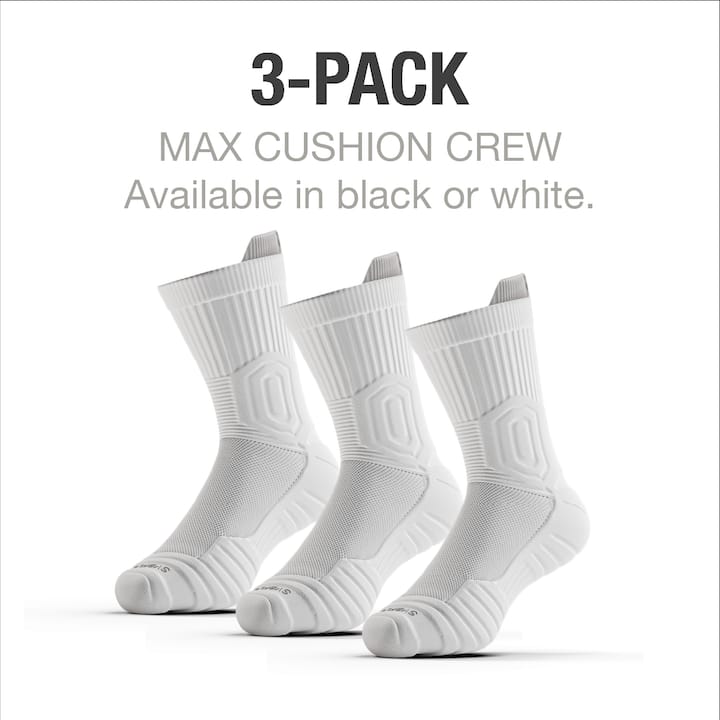
For everyday wear and cushioned comfort, the CloudFusion™ Athletic Cushioned Crew Socks fit the standard S/M/L/XL range and suit anyone who wants more padding underfoot. If you want a closer, cooler fit for running or training, the RaceKnit™ Ultralight Cooling Crew Socks use a tighter, moisture-wicking knit, and their size chart runs slightly snugger than standard crew socks. For low-cut sneakers, the CloudFusion™ Athletic Cushioned Low Socks give you the same cushioned platform in a no-show length.
Do Compression and Athletic Socks Size Differently?
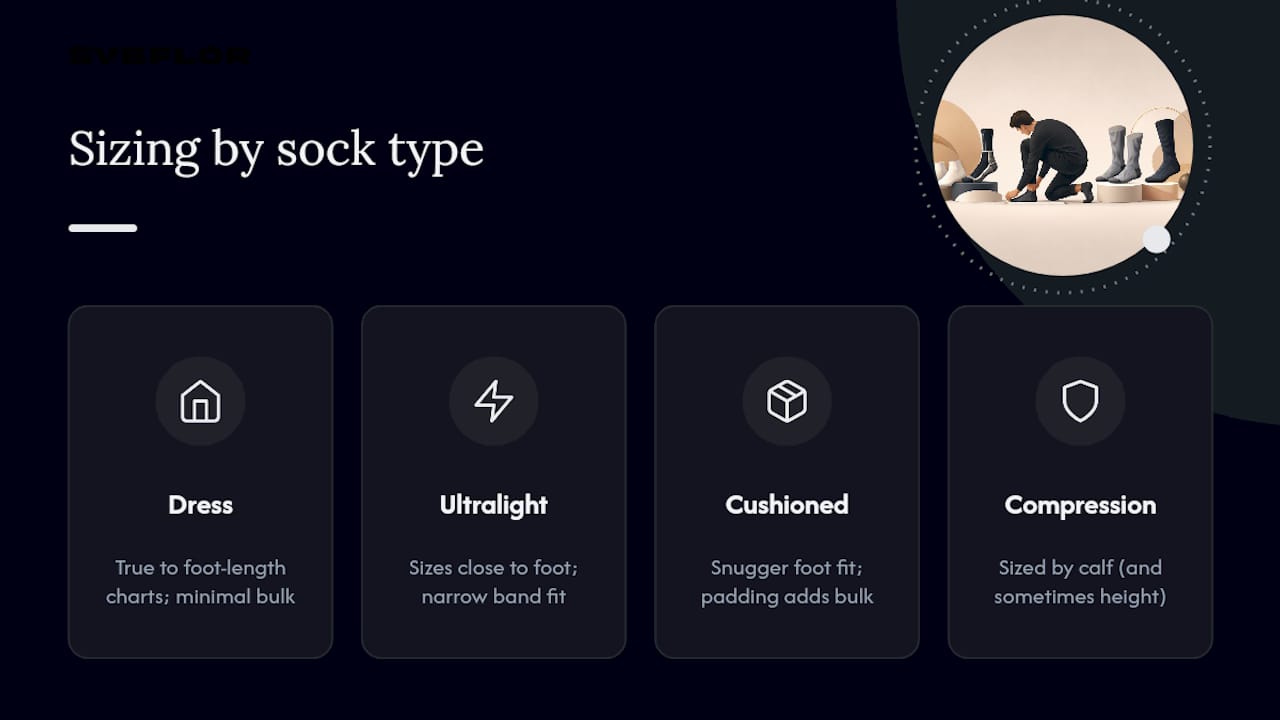
Specialty socks don’t follow the standard S/M/L/XL shoe-size chart the way everyday crew socks do. Compression socks size by calf circumference and sometimes height, not just foot length, because the graduated pressure has to match your leg’s actual diameter to work correctly. Buying compression socks off a standard foot-length chart is one of the most common fit mistakes, since a sock that fits your foot can be too tight or too loose around the calf if you skip that second measurement.
Athletic socks built for running or training often size closer to the foot than casual socks, even within the same label. A running-specific “medium” might correspond to a narrower shoe-size band than a casual crew sock’s medium, because performance socks are engineered to reduce excess material that can cause blisters or bunching inside a running shoe. Cushioned athletic socks, in particular, need that snugger base fit since the padding itself adds bulk.
Dress socks and thin, ultralight styles tend to run true to standard charts since they add minimal bulk. If you’re shopping across categories, whether that’s swapping between a thick hiking sock and a thin dress sock, don’t assume the same size label behaves identically. Check the specific chart for that sock’s construction type rather than carrying over a size from a different category. This is especially true when brands market a compression or athletic line separately from their standard socks, since the sizing logic behind each one is built around a different fit priority.
What Sizing Charts Get Wrong
Most sizing guides treat the shoe-size chart as the finish line, and that’s the biggest gap in conventional advice. A chart tells you where you probably fit. It doesn’t tell you what you’re going to feel wearing the sock for eight hours in a work boot versus a two-hour run in a lightweight trainer.
The real skill isn’t reading a chart. It’s knowing which factor to weight when the chart and your instinct disagree. If you’re buying a cushioned crew sock and you’re on the line between medium and large, the padding itself is the tiebreaker, not the shoe size printed on the box. If you’re buying an ultralight running sock, trust the tighter end of the range, because loose fabric in a performance sock causes blisters faster than a snug fit ever will.
What gets underestimated is material recovery. A sock that fits perfectly out of the package can loosen within a dozen washes if the elastic isn’t built to hold its shape. That’s a bigger long-term fit factor than most buyers realize, and it’s worth checking before size, not after.
Start with the shoe-size range. Verify with a measurement if you’re unsure. Then let the sock’s job, cushioned comfort, cooling performance, or low-profile fit, make the final call.
— Karina Cartwright
Ready to Shop? Check Your Size First
The socks are designed considering fit factors such as shoe-size ranges, cushion level, and material recovery that holds shape through washing. Instead of guessing between generic charts, customers are encouraged to check sizing pages against the specific style desired before purchase.
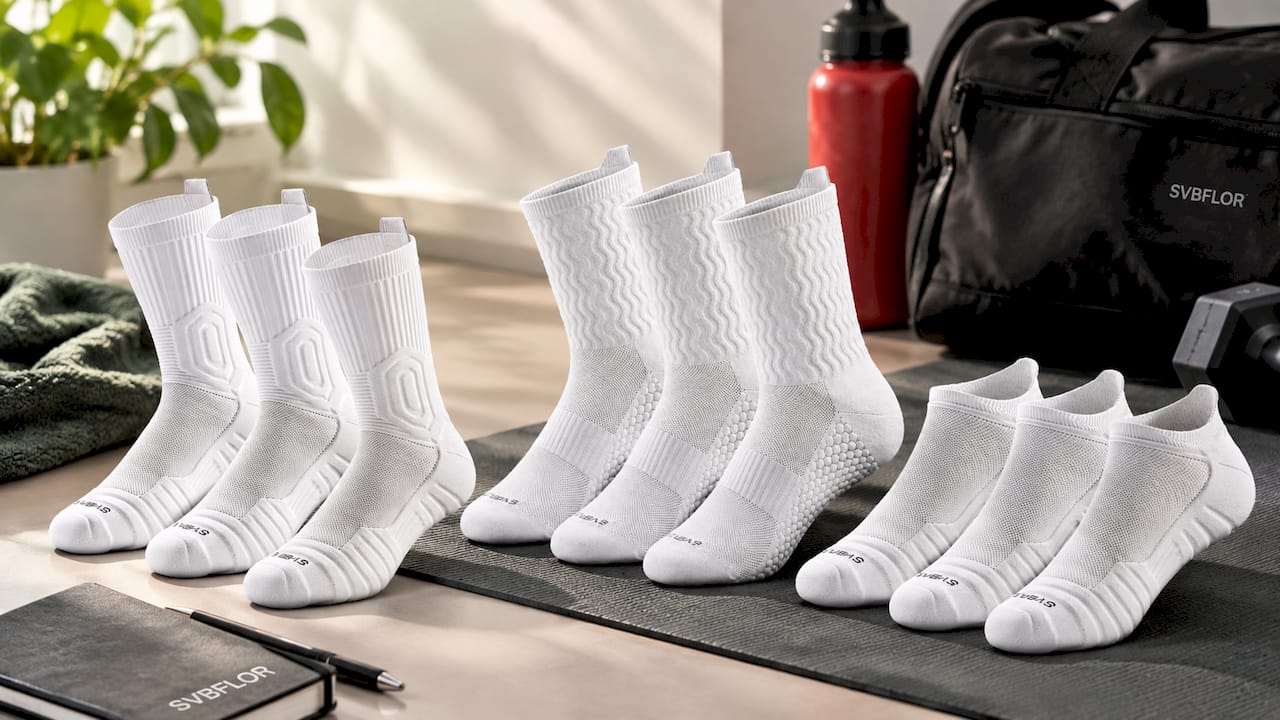
If you want everyday cushion, the CloudFusion™ Athletic Cushioned Crew Socks are built for that S/M/L/XL range with extra padding underfoot. Runners and anyone training in warm conditions should look at the RaceKnit™ Ultralight Cooling Crew Socks for a closer, cooling fit, while low-cut sneaker wearers can browse the CloudFusion™ Athletic Cushioned Low Socks. Browse the full socks collection at $27, and measure your foot heel to toe before you check out so you land on the right size the first time.
Sources
These are the sizing references worth bookmarking alongside SVBFLOR’s own charts:
- Sock size charts - Running Warehouse
- How to Choose Sock Size: A Simple Guide | wikiHow
- Ankle or crew socks for workouts? | Men’s Health
Always cross-check the specific product page chart before buying, since brand ranges shift even when the size labels look identical.
FAQ
Is Sock Size the Same as Shoe Size?
Not exactly. Sock sizes usually correspond to a range of shoe sizes rather than one exact number, which is why a size label like medium can cover several shoe sizes at once. Nike’s chart and similar manufacturer references show this range format clearly.
What Size Is a Sock Labeled 8-10?
A sock labeled 8 to 10 fits shoe sizes 8 through 10, typically in women’s or kids’ sizing depending on the brand. It’s a shoe-size range printed directly on the label instead of a letter size like S or M.
What Does Sock Size 10 to 13 Mean?
Sock size 10 to 13 refers to a shoe-size range, most commonly men’s, meaning the sock is designed to fit comfortably across shoe sizes 10 through 13. This range typically corresponds to a large or extra-large label on charts that use S/M/L/XL instead of numbers.
What Is the Standard Size for Socks?
There’s no single standard size, since most brands use S/M/L/XL ranges tied to shoe size rather than one universal fit. Checking the specific size chart for the sock you want, whether that’s a cushioned crew or an ultralight style, gives a more reliable answer than assuming one size fits every brand.
How Do I Know if I Need a Wide Sock Size?
If your foot measures at the top or beyond the range listed for your size, or your current socks feel tight across the ball of the foot, a wide size or one size up usually solves it. Brands with dedicated wide options, or an XL label, tend to accommodate higher-volume feet better than sizing down and stretching the sock.

